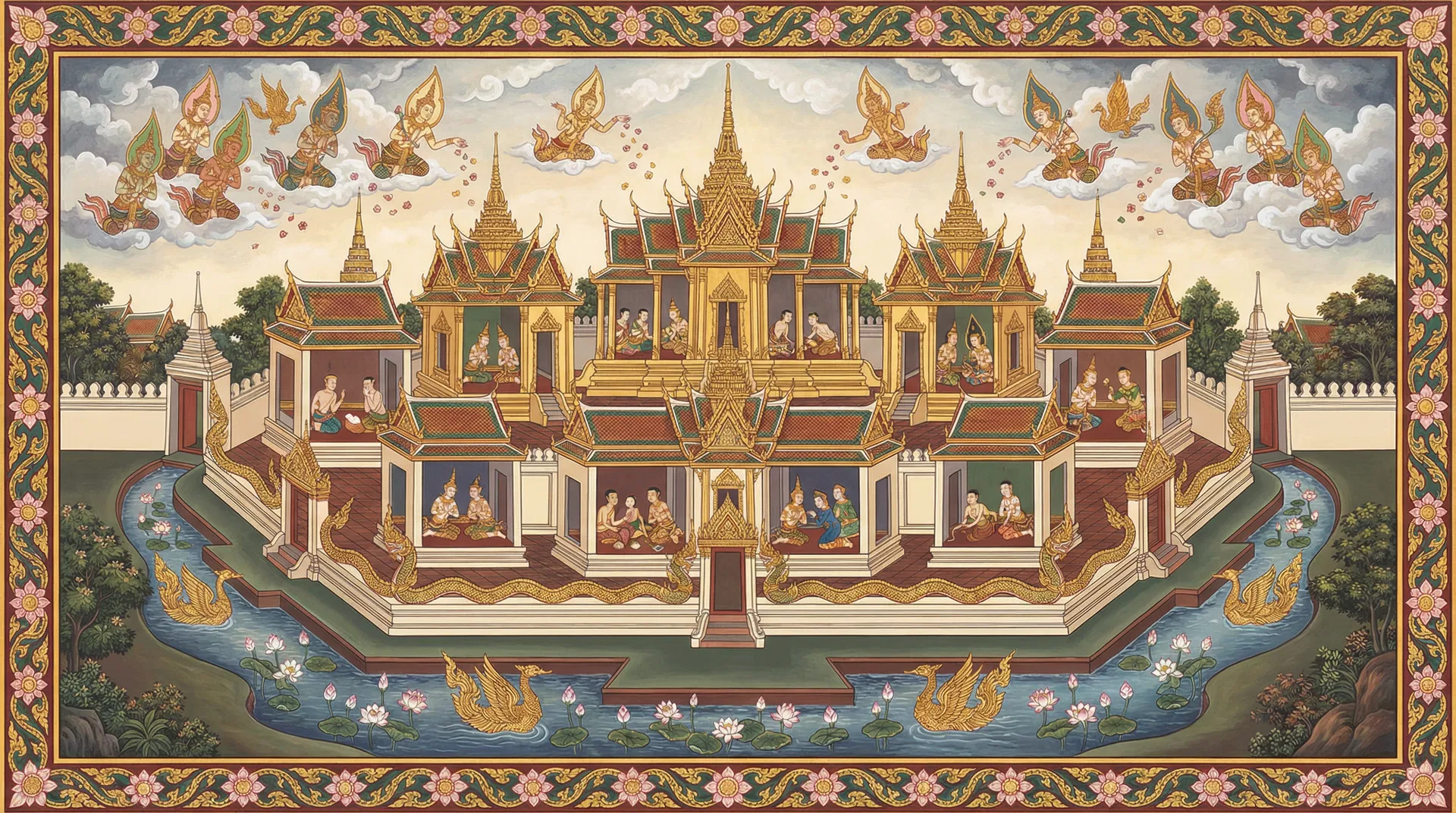
Mugapakkha Jataka
Mugapakkha Jataka
In the ancient kingdom of Kosala, under the benevolent gaze of a king who ruled with justice and wisdom, lived a Bodhisattva who, in a past existence, was born as a prince named Prince Mahasattva. He was the son of King Ekapotta, a monarch known for his righteousness and his devotion to truth. Young Mahasattva, even in his youth, displayed an extraordinary purity of heart and a profound understanding of moral principles.
One day, a fearsome celestial being, a Yaksha, descended from the heavens, his form radiating an aura of terror. This Yaksha, driven by a malicious intent, sought to sow discord and fear among mortals. He appeared before King Ekapotta and, with a voice that rumbled like thunder, declared that he would bring about a terrible drought, a famine that would cripple the kingdom and test the resolve of its people. He boasted of his power to control the elements and declared that only a sacrifice of immense purity could appease his wrath.
King Ekapotta, a man of deep faith and unwavering courage, stood firm against the Yaksha's threats. He declared that his kingdom would not bow to fear and that he would seek a way to overcome this challenge through virtue and righteous action. However, the Yaksha, relentless in his pursuit of causing suffering, continued to spread whispers of impending doom, creating an atmosphere of anxiety throughout the land.
Prince Mahasattva, witnessing the distress of his people and the arrogance of the Yaksha, understood that a direct confrontation might lead to further destruction. He pondered deeply on how to resolve this crisis without resorting to violence, for he knew that violence only begets more violence. He recalled the teachings of the sages about the power of self-sacrifice and the profound merit that could be gained by laying down one's life for the welfare of others.
After much contemplation, Prince Mahasattva made a decision that would echo through the ages. He resolved to offer himself as a sacrifice to the Yaksha, not out of fear, but out of boundless compassion for his people. He believed that by giving his own life, he could appease the Yaksha's anger, end the threat of drought, and protect his kingdom from ruin. He understood that this was the ultimate act of selfless giving.
He approached his father, King Ekapotta, and explained his intention. The king, though heartbroken at the thought of losing his beloved son, recognized the immense purity of Mahasattva's heart and the depth of his compassion. He understood that his son’s decision was not one of despair, but of profound love and sacrifice. With tears in his eyes, the king gave his blessing, knowing that his son was embarking on a noble mission.
Prince Mahasattva then went to the desolate place where the Yaksha had appeared. He sat in quiet meditation, his mind calm and serene, radiating an aura of peaceful resolve. As the Yaksha descended once more, expecting to find fear and supplication, he was met by the serene presence of the prince. Mahasattva addressed the Yaksha not with anger, but with a voice filled with compassion and understanding.
He said, "O powerful Yaksha, I have come to offer myself in exchange for the peace and well-being of my kingdom. I understand that your power is great, and that you seek to test the strength of mortals. But know this: true strength lies not in destruction, but in selfless giving. I offer my life, not because I am afraid, but because I love my people more than my own existence."
The Yaksha, accustomed to fear and aggression, was taken aback by the prince's courage and the profound purity of his offering. He had never encountered such selfless love and unwavering resolve. The prince’s willingness to sacrifice himself for the sake of others was a force that even his malevolent power could not contend with.
As Prince Mahasattva prepared to fulfill his vow, a miraculous event occurred. The heavens opened, and a shower of celestial flowers rained down upon the prince. The Yaksha, witnessing this divine affirmation of Mahasattva's virtue, was deeply moved. His heart, hardened by malice, began to soften. He realized the immense power of true compassion and the futility of his destructive intentions.
The Yaksha, his voice now gentle and filled with remorse, addressed Prince Mahasattva. "Prince," he said, "I have never before witnessed such selfless love and profound courage. Your virtue has overcome my malice. I cannot accept your sacrifice, for it would be an act of great injustice. Instead, I shall withdraw my threat and bless your kingdom with abundance and prosperity."
The Yaksha then vanished, and the threat of drought was lifted. The kingdom rejoiced, not only because the danger had passed, but also because they had witnessed the extraordinary compassion and sacrifice of their prince. Prince Mahasattva, having saved his people through his selfless act, continued to live a life dedicated to virtue and the welfare of all beings. His story became a legendary tale, a testament to the fact that the greatest power lies not in might, but in the boundless compassion and willingness to sacrifice for the good of others.
True strength lies not in destruction, but in selfless giving. The greatest power lies not in might, but in the boundless compassion and willingness to sacrifice for the good of others.
— In-Article Ad —
💡Moral of the Story
Selfless sacrifice and boundless compassion are powerful forces that can overcome malice and bring about peace and prosperity.
Perfection: Sacrifice (Alaya Paramita)
— Ad Space (728x90) —
More Jataka Tales You May Enjoy
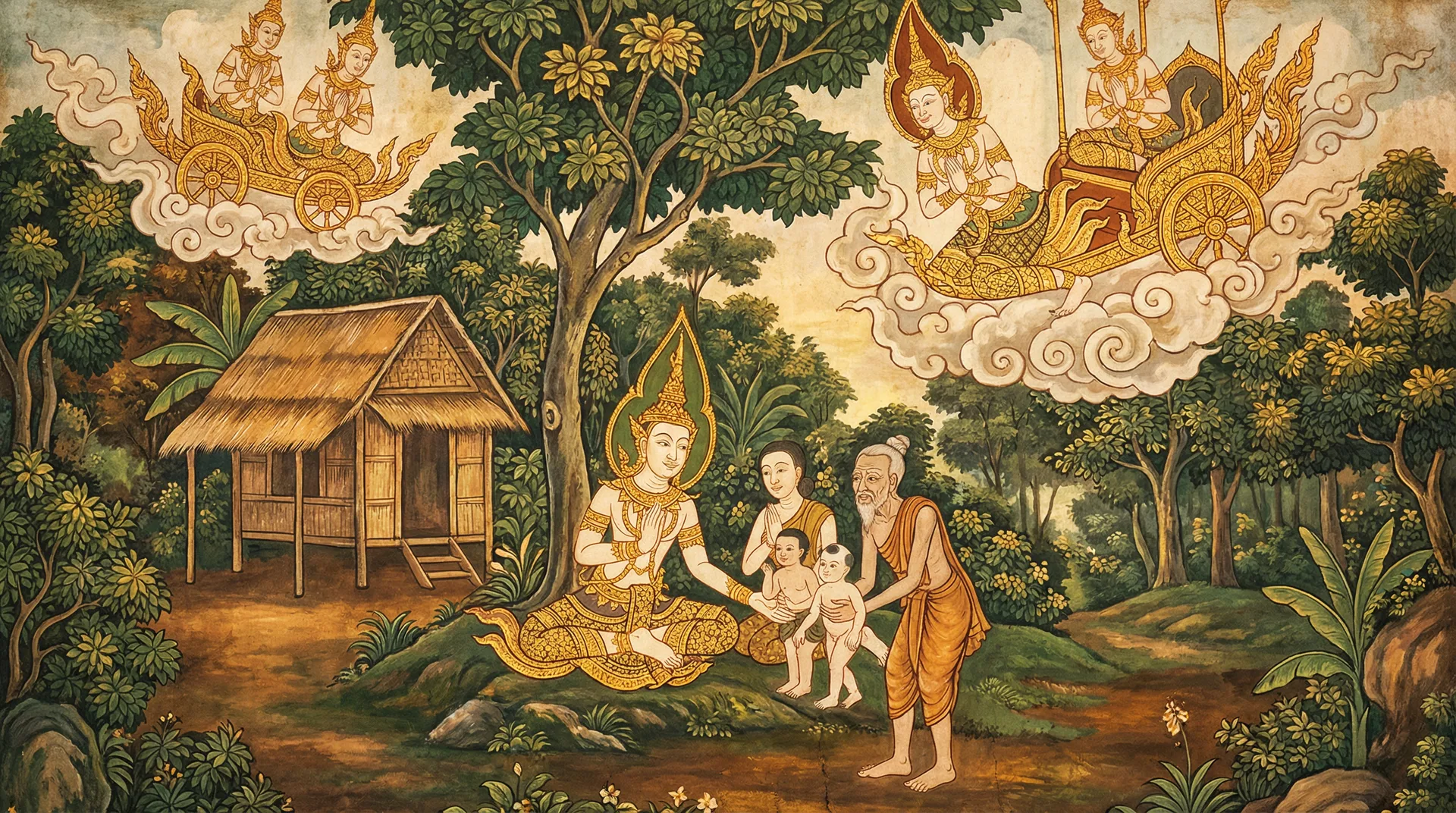 538Mahānipāta
Kusa Jataka
The Tale of Prince Kusa and the Trials of Love In the magnificent city of Indapatta, ruled King Okka...
💡 True love is characterized by loyalty, commitment, and unwavering devotion. Infatuation is fleeting and can lead to great suffering, while true love endures through trials and tribulations.
 160Dukanipāta
Rohana Jataka
Rohana JatakaIn the ancient city of Ujjeni, a hub of trade and culture, lived a wealthy merchant nam...
💡 True wealth lies not in hoarding material possessions, but in sharing them to alleviate the suffering of others.
 261Tikanipāta
Nimi Jataka
Nimi JatakaIn the glorious city of Mithila, ruled the wise King Nimi. His reign was a beacon of righ...
💡 Even the most glorious heavenly realms are impermanent. True and lasting happiness is found in the liberation from suffering through the attainment of Nirvana, which requires inward cultivation of wisdom and detachment.
 141Ekanipāta
Mugapakkha Jataka
The Tale of the Mute Prince In the ancient kingdom of Mithila, ruled a just king named Dhanañjaya. H...
💡 True leadership is demonstrated through actions, courage, and compassion, not merely through eloquent speech.
44EkanipātaThe Bodhisatta as the Elephant King
The Bodhisatta as the Elephant KingIn the heart of a magnificent, ancient forest, where trees touche...
💡 True leadership is demonstrated through selfless sacrifice and unwavering dedication to the welfare of others.
4EkanipātaThe Tale of the Excellent Archer
The Tale of the Excellent Archer In the ancient kingdom of Mithila, a land blessed with fertile pla...
💡 Accusing others without reason and having impure intentions inevitably lead to one's own suffering. Forgiveness and genuinely good deeds are the path to peace and happiness.
— Multiplex Ad —